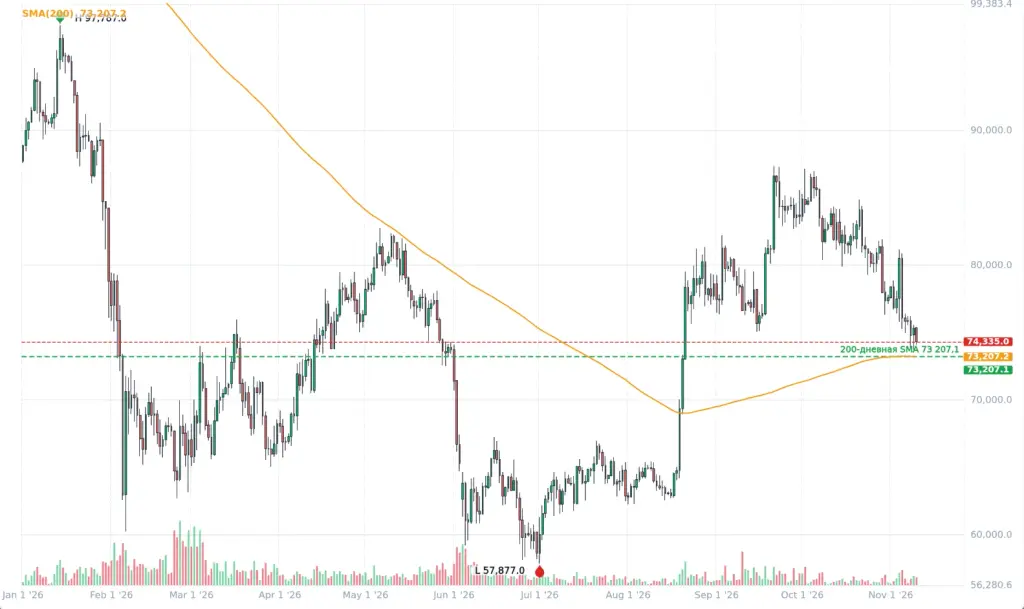
As of 3:17 p.m. Moscow time on November 10, Bitcoin is trading at $74,340. This is 0.76% lower than at the start of the day. Looking at the long-term trend, the asset has fallen 4.06% over the past week, lost 10.45% over the past month, and declined 15.25% since the beginning of the year. For the year as a whole, the decline amounted to nearly 30%, although the market has still grown by 16.17% over the past three months. The price is currently nearly 31% below its annual high of $107,500. The total market capitalization of the crypto market stands at $2.48 trillion, with Bitcoin accounting for 60.3% of that total.
According to 24/7 Wall St., the price is under pressure from outflows from exchange-traded funds. For example, from November 2 to 6, $1.28 billion was withdrawn from U.S. spot Bitcoin ETFs. Meanwhile, Strategy, the company holding the largest amount of Bitcoin among corporations, purchased an additional 1,036 BTC last week. According to an 8-K filing, they currently hold 850,364 BTC on their balance sheet, with an average purchase price of approximately $75,500.
How Bitcoin’s price has changed over the year:
If we analyze the period from November 2025 to October 2026, we see a 29.34% price decline (from $109,820 to $77,597 at the end of the month). A downward trend prevailed during this period: 7 out of 12 months closed in the red. The strongest growth occurred in August 2026, when the price jumped by 25.01% (from $62,899 to $78,629). However, the market saw its sharpest decline in June, losing 20.44% (from $73,725 to $58,654). On average, the price fluctuated by 2.05% per month, while the median change was a decline of 3.20%.
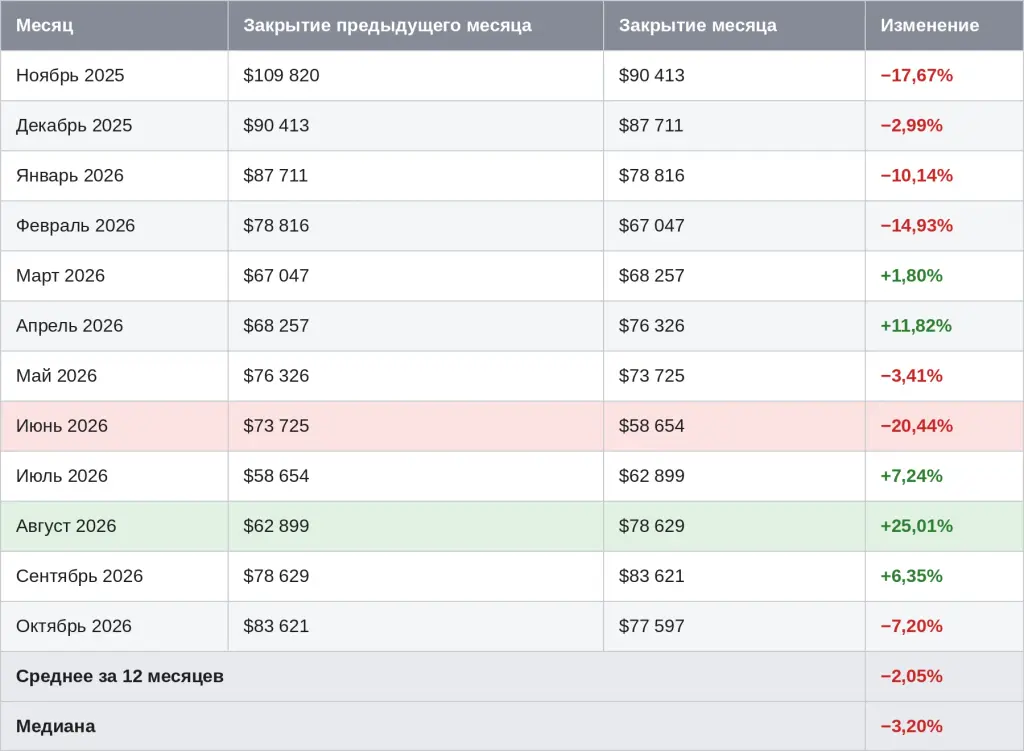
Data on monthly Bitcoin price fluctuations from November 2025 through October 2026 is provided by WarrenAI 2.0.

WarrenAI 2.0 also compared the current price to the 200-day moving average. This indicator currently stands at $73,207, so the current price of $74,331 exceeds it by only 1.54%. It appears that the gap is currently minimal.